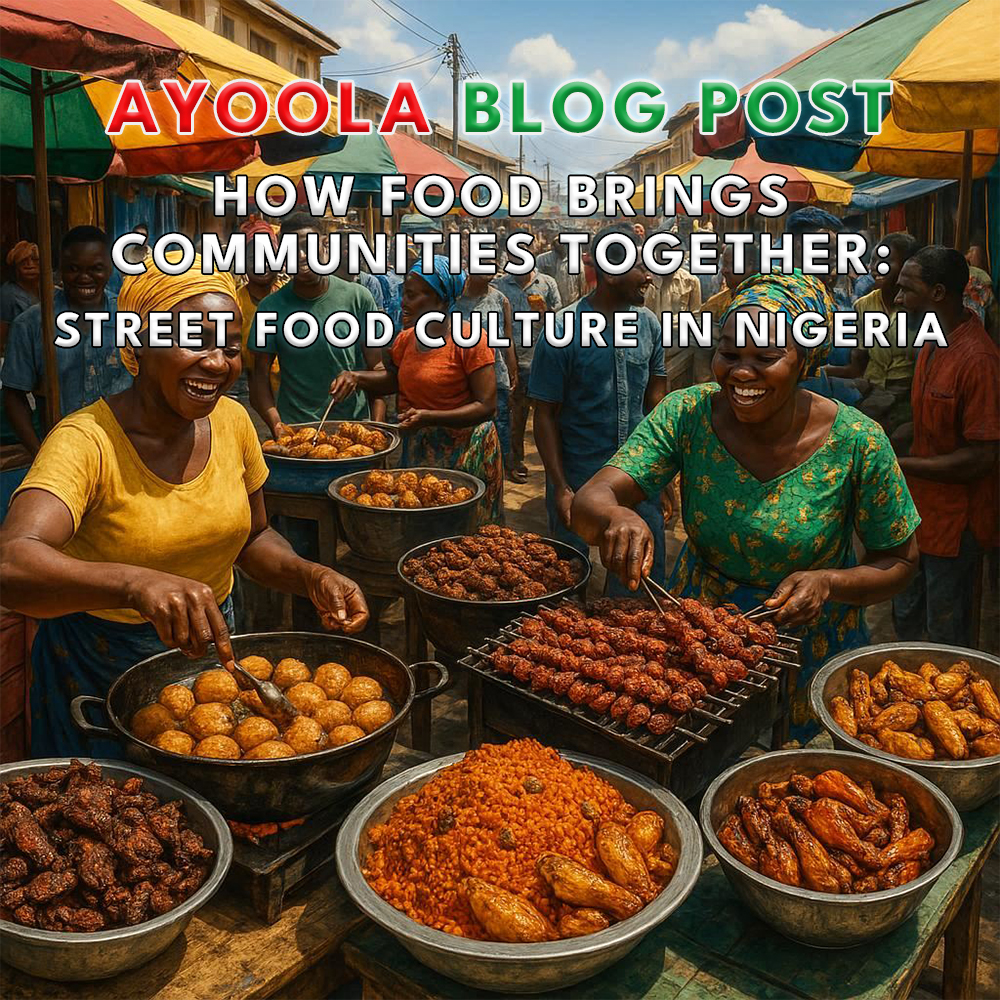
One of the things that tells a lot about a place is how the people in it handle food. If you know anything about Nigerians you’d know that food to us, food is a uniting force and nowhere is this more evident than in the bustling world of street food. From the smoky suya stands to the akara sellers in street corners, street food isn’t just about quick bites; it’s about community, connection, and culture.
The Street as a Dining Table
Walk down any Nigerian street and you’ll find vendors serving meals that are both affordable and delicious. Whether it’s puff-puff, boli with groundnut, or steaming plates of amala or rice, street food brings people from all walks of life together. Rich or poor, student or banker, everyone lines up at the same stall, waiting their turn to enjoy familiar flavors. The street becomes the dining table, and laughter, gist, and bargaining turn the act of eating into a communal experience.
A Shared Identity
Street food is more than convenience. Ask an average Nigerian about suya, and their eyes light up. It isn’t just roasted meat; it’s the evening outing with friends, the newspaper-wrapped spice mix, and the smoky aroma that fills the air. The same goes for abacha (African salad) in Enugu or masa with yaji in the North. Each dish tells a story of place and people, reminding us that food isn’t just eaten, it is shared, remembered, and celebrated.
A Meeting Point for Generations
Street food also bridges generations. Parents who once bought snacks after school now share the same treats with their children. The akara and pap of yesterday became breakfast tradition today. In this way, food becomes a living heritage, connecting the past to the present, and reminding us that some of the best recipes are the ones we keep alive together.
Economy Meets Culture
Street food culture also supports thousands of livelihoods. From the pepper seller to the roasted yam vendor, street food creates a ripple effect that sustains families and strengthens local economies. And because it is rooted in tradition, it celebrates local ingredients, cassava, yam, plantain, beans and others that continue to define Nigerian cuisine.
Why It Matters
In a world that sometimes feels divided, food has a unique way of uniting us. Nigeria’s street food culture proves that meals shared in open spaces build more than satisfied stomachs, they build communities. Every bite is an invitation to connect, to slow down, and to enjoy the everyday magic of being together.
So the next time you grab suya by the roadside or sip kunu from a bottle , remember: you’re not just eating, you’re participating in one of Nigeria’s richest traditions of community and togetherness.
Remember you can also make some of your favorite street food at home with our Ayoola products. Have a wonderful day!